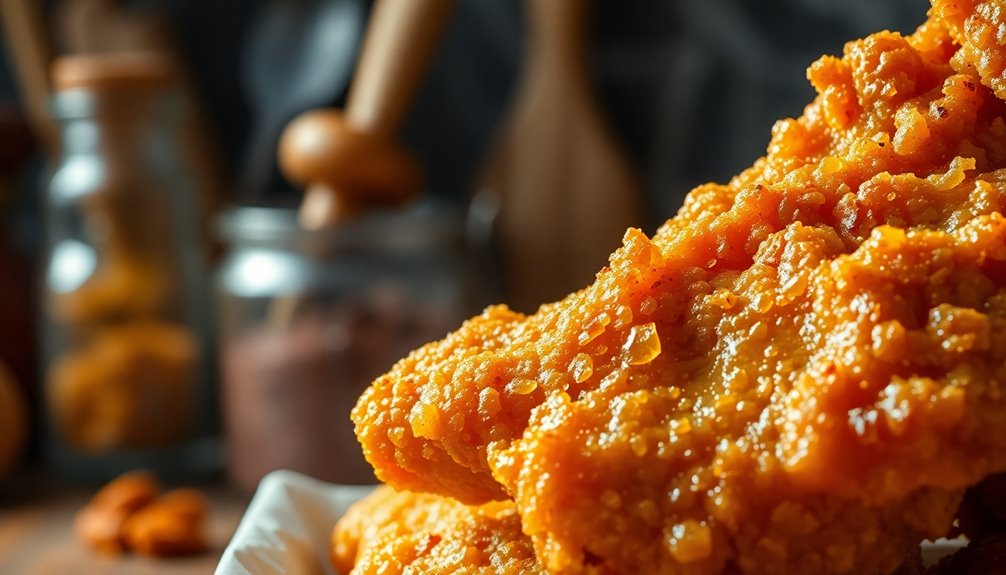
Revealing the secrets behind crispy fried perfection involves mastering several key elements. It’s vital to control oil temperature, as it seals moisture and prevents sogginess. Choosing high smoke point oils contributes to stability and flavor. Proper ingredient preparation, including drying and marinating, increases crunchiness. Techniques like double-dipping improve texture. Furthermore, comprehending the differences between deep and shallow frying plays an important role. These insights set the stage for achieving that ideal crunch and more delightful frying techniques await.
Article Highlights
- Use high smoke point oils like canola or peanut for frying to prevent harmful compounds and achieve optimal crispiness.
- Maintain the right oil temperature to seal moisture quickly, preventing excess oil absorption and promoting a crispy texture.
- Properly dry ingredients before frying to minimize moisture, ensuring a crunchier finish and avoiding steaming effects.
- Master double-dipping techniques with wet batter and crumbs to enhance flavor absorption and achieve ultimate crunchiness.
- Avoid overcrowding the frying pan to maintain oil temperature, ensuring even cooking and preventing greasy results.
The Science of Frying: Understanding Heat and Oil

In relation to achieving crispy fried perfection, grasping the science behind heat and oil is essential. The key lies in thermal conduction, which refers to how heat transfers from the hot oil to the food. When the oil’s temperature is ideal, it creates a rapid heat transfer, cooking the outer layer quickly as it seals in moisture. Oil viscosity is likewise significant; thicker oils tend to retain heat better, maintaining a consistent frying temperature. This guarantees that food cooks evenly, resulting in a crispy exterior. Conversely, if the oil’s viscosity is too low, it can lead to soggy results. Comprehending these principles helps home cooks master the art of frying and achieve that golden, crispy texture everyone loves.
Choosing the Right Oil for Frying
What makes one oil better than another for frying? It often comes down to oil types and their stability. Oils with high smoke points, like canola, peanut, and sunflower oil, are ideal for frying, as they can withstand higher temperatures without breaking down. This stability prevents the formation of harmful compounds and guarantees a clean flavor. Moreover, oils rich in monounsaturated fats, such as olive oil, can likewise offer health benefits, though they may have lower smoke points. Choosing the right oil affects the taste and texture of fried foods but impacts overall health. By comprehending oil types and their stability, cooks can make informed decisions to achieve crispy fried perfection.
The Role of Temperature in Achieving Crispiness
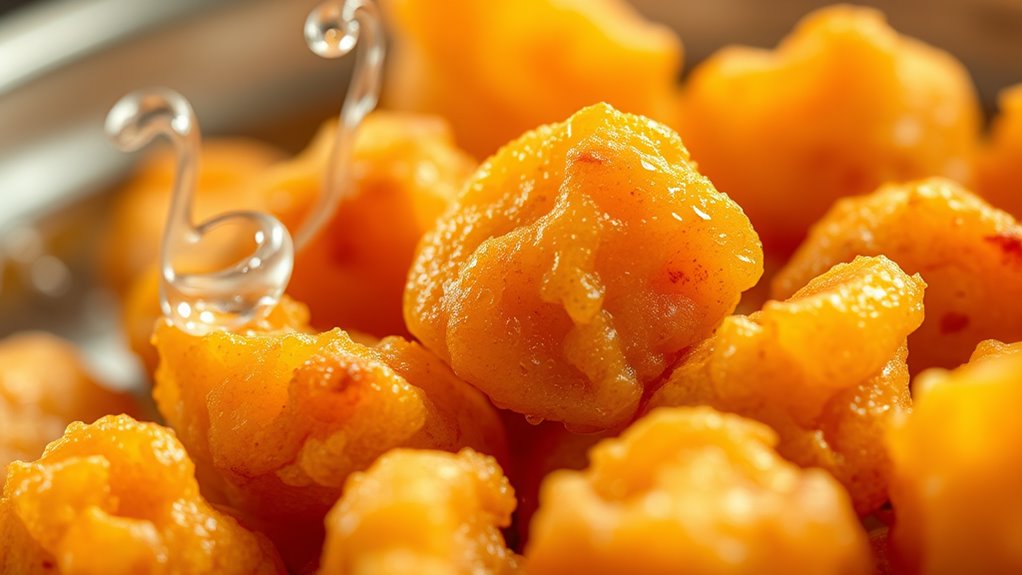
In the quest for crispy fried foods, temperature plays a vital role. The ideal oil temperature guarantees that the exterior cooks quickly, creating a golden crust as it keeps the inside tender. Furthermore, proper heat distribution and cooking time can greatly impact the final texture, making attention to these factors fundamental for achieving perfection.
Ideal Oil Temperature
Achieving that perfect crispy texture relies heavily on the oil temperature used during frying. When oil reaches the ideal temperature, its viscosity decreases, allowing food to cook thoroughly as it forms a golden crust. Frying thermometers play an essential role in monitoring this temperature, ensuring consistency and preventing sogginess.
| Oil Temperature (°F) | Effect on Crispiness |
|---|---|
| 325 | Lightly crispy |
| 350 | Moderately crispy |
| 375 | Perfectly crispy |
| 400 | Overly crispy |
| 425 | Burnt, less crispy |
Maintaining the right temperature is critical; too low, and food absorbs excess oil, whereas too high can lead to burnt exteriors. A careful balance results in that delightful crunch everyone loves.
Cooking Time Impact
Oil temperature plays a significant role, but cooking time similarly impacts the crispiness of fried foods. The right cooking time guarantees that the outer layer becomes golden brown and crunchy as the inside remains tender. If food’s ingredient thickness is too great, longer cooking times may be required, but this can additionally lead to overcooking and a soggy texture. Conversely, thinner ingredients cook faster, achieving crispiness without losing moisture. It’s essential to strike a balance; undercooking can leave the exterior soft, as overcooking can compromise the desired crunch. Comprehending the relationship between cooking time and ingredient thickness allows cooks to achieve that perfect crispy fried finish every time, guaranteeing delicious results that delight the palate.
Heat Distribution Importance
Though many cooks focus on the right oil temperature, the importance of even heat distribution can’t be overlooked when aiming for that perfect crispy finish. Proper heat conduction guarantees that food cooks uniformly, preventing uneven textures or sogginess. Different frying methods, such as deep frying or pan frying, can affect how heat distributes throughout the oil and into the food. For instance, deep frying submerges ingredients, allowing consistent heat exposure, whereas pan frying may require careful attention to confirm all sides receive adequate heat. When heat is evenly distributed, moisture escapes efficiently, leading to that delightful crunch. In the end, mastering heat distribution is key to achieving the coveted crispy texture that everyone loves.
Preparing Ingredients: The Key to Crunch

To achieve that perfect crunch, choosing the right flour is crucial, as it affects the texture of the final dish. Marinating ingredients not only improves flavor but additionally contributes to a crispier coating. Finally, proper drying techniques guarantee moisture is minimized, allowing for that satisfying crunch everyone craves.
Choosing the Right Flour
When it pertains to achieving that coveted crunch in fried foods, the choice of flour plays a crucial role. Various flour types offer different textures and flavors, impacting the final result. For instance, all-purpose flour, with moderate gluten content, provides a balanced coating that crisps well without being too dense. Conversely, using cake flour, which has lower gluten content, can yield a lighter, airier crust, whereas bread flour, containing higher gluten, might create a chewier texture. For an extra crunch, some chefs opt for cornstarch or rice flour, as these alternatives can improve crispiness without the weight of traditional flours. In the end, selecting the right flour type customized to the dish can raise the frying experience, ensuring that perfect crunch.
Marinating for Extra Flavor
Marinating not just improves the flavor of fried foods but furthermore contributes to achieving that sought-after crunch. The right marinade variations can raise the taste and guarantee a deep flavor infusion, making each bite irresistible. Here are some popular marinade options to contemplate:
- Buttermilk – Tenderizes and adds a tangy flavor.
- Soy Sauce and Ginger – Creates an umami-rich base with a hint of spice.
- Citrus Marinade – Brightens dishes with zesty flavors and acidity.
- Spicy Yogurt – Adds creaminess as it infuses heat and herbs.
Experimenting with these marinades can transform regular fried dishes into extraordinary culinary experiences, enhancing both flavor and texture.
Proper Drying Techniques
After marinating, it’s vital to prepare the ingredients for frying to achieve that perfect crunch. Proper drying techniques play an important role in moisture control, which directly impacts the final texture. Using drying methods like air-drying or patting the ingredients with paper towels helps remove excess moisture. This step prevents the formation of steam during frying, which can lead to sogginess. For best results, allowing the ingredients to rest for a few minutes after drying guarantees any residual moisture evaporates. Furthermore, using a wire rack can facilitate air circulation, enhancing the drying process. In the end, mastering these techniques sets the foundation for achieving that irresistible crispy texture everyone craves in fried dishes.
Mastering Batter: Techniques for the Perfect Coating
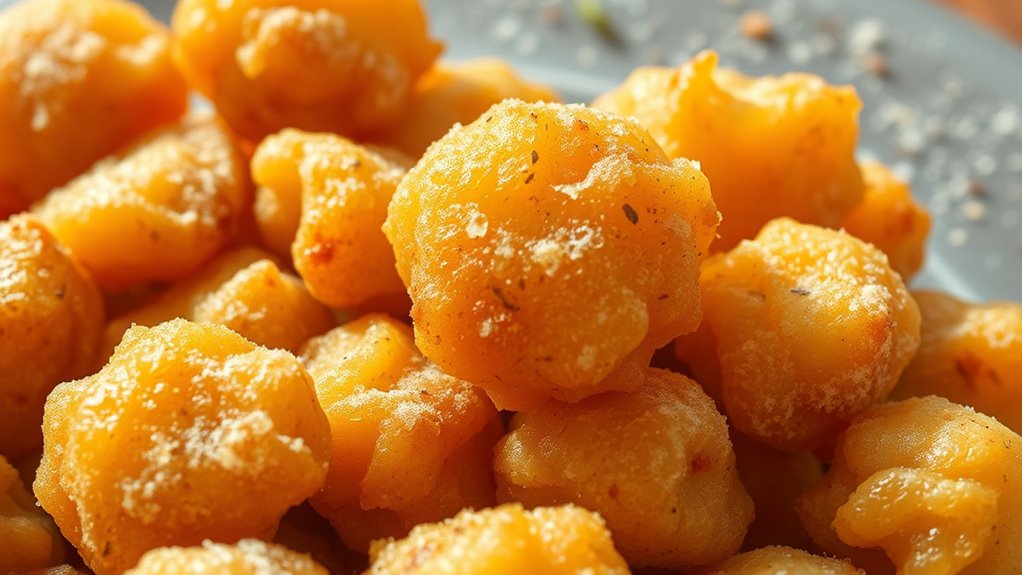
Achieving the perfect coating for crispy fried dishes hinges on perfecting the mixture. Different batter variations can boost any meal, but it’s crucial to understand the basics. Here are some techniques for a flawless coating:
- Consistency is Key: Aim for a smooth, thick batter that clings well to the food.
- Chill the Batter: Letting the batter rest in the fridge can help achieve a crunchier texture.
- Add Flavor: Incorporating spices or herbs into the batter can improve the dish’s overall taste.
- Explore Gluten-Free Options: Use alternatives like rice flour or chickpea flour for a delicious, crispy result without gluten.
With these tips, anyone can perfect the art of batter for perfectly crispy fried dishes.
The Art of Breading: Tips for Maximum Crunch
In relation to achieving that perfect crunch, choosing the right coating is crucial. Many chefs swear by double-dipping techniques to create an extra layer of crispiness. Comprehending these methods can enhance any fried dish to new heights of deliciousness.
Choosing the Right Coating
Although many may overlook the importance of coating, the right breading can make all the difference in achieving that coveted crispy texture. Different coating types provide unique texture variations, enhancing the overall fried experience. Here are some popular choices worth evaluating:
- Breadcrumbs – Ideal for a classic crunch; panko breadcrumbs offer an extra light and airy texture.
- Flour – A simple option that creates a delicate layer, perfect for light frying.
- Cornmeal – Adds a distinct crunch and a slightly sweet flavor, great for Southern-style dishes.
- Tempura Batter – Light and crispy, this batter creates an airy coating that maintains the moisture of the food inside.
Selecting the right coating is key for that perfect fry.
Double-Dipping Techniques Explained
Double-dipping can improve the crunch factor of fried foods, making it an essential technique for achieving that perfect texture. By applying two layers of coating, home cooks can enjoy the double dipping benefits, such as increased crispiness and better flavor absorption. There are several double dipping methods worth exploring, including using a wet batter followed by breadcrumbs or alternating between flour and egg.
| Method | Primary Benefit | Ideal For |
|---|---|---|
| Wet batter + crumbs | Ultimate crunch | Chicken, vegetables |
| Flour + egg | Rich flavor | Fish, shrimp |
| Flour + seasoned mix | Better seasoning | Tofu, mushrooms |
Mastering these techniques can greatly improve the quality of fried dishes, making them irresistibly crunchy.
Double-Dipping: A Secret to Extra Crispy Results

Whereas many cooks swear by a single coating of flour or batter, those in the know understand that double-dipping is the secret weapon for achieving an irresistibly crispy exterior. This technique not only improves the texture but also locks in moisture, resulting in a mouthwatering crunch. Here are some double dipping benefits:
- Increased Thickness: A second layer adds more substance, creating a heartier crust.
- Better Adhesion: The moisture from the first dip helps the second layer stick effectively.
- Improved Flavor: Extra coating allows for more seasoning and flavor infusion.
- Ultimate Crunch: The added layers fry to a golden perfection, delivering that satisfying crunch.
Incorporating double-dipping into frying routines transforms ordinary dishes into extraordinary ones.
Frying Techniques: Deep Frying vs. Shallow Frying
As for frying techniques, cooks often debate the merits of deep frying versus shallow frying. Deep frying involves submerging food completely in hot oil, resulting in a crispy exterior and quick cooking time. Since the food’s fully immersed, it typically experiences less oil absorption, which can lead to lighter dishes. Conversely, shallow frying uses less oil, covering only part of the food. This method allows for a more controlled cooking process and can improve flavor, but it may lead to higher oil absorption, making the final product greasier. In the end, the choice between deep and shallow frying depends on the desired texture and flavor profile, with each technique offering unique advantages for achieving crispy fried perfection.
Common Mistakes to Avoid for Crispy Fried Foods
To achieve truly crispy fried foods, it’s essential to steer clear of common mistakes that can compromise texture and flavor. Even seasoned cooks can fall into traps that lead to soggy results. Here are some pitfalls to watch out for:
- Overcrowded pan: Frying too many pieces at once lowers the oil temperature, resulting in greasy food.
- Incorrect batter: A batter that’s too thick or thin won’t adhere properly, ruining the desired crunch.
- Skipping the drying process: Moisture on the food can lead to steam rather than crispiness.
- Neglecting oil temperature: Frying at the wrong temperature can cause uneven cooking and sogginess.
Avoiding these mistakes will help anyone achieve that perfect crispy finish every time.
Enhancing Flavor: Seasoning and Marinating Tips
Even though achieving the perfect crispy finish is significant, enhancing flavor through seasoning and marinating is equally vital for elevating fried dishes. Chefs often recommend using a variety of herb blends and spice combinations to infuse depth into the ingredients before frying. For instance, marinating proteins in a mixture of yogurt, garlic, and spices can tenderize while adding layers of flavor. Similarly, dry rubs featuring paprika, cumin, and black pepper can create a flavorful crust. It’s important to allow enough time for the marinade to penetrate the food, ideally overnight. Experimenting with different seasonings enriches taste and complements the crispy texture, resulting in a truly satisfying dish that delights the senses.
Frequently Asked Questions
Can I Reuse Frying Oil Multiple Times?
The question of reusing frying oil often arises among home cooks. It’s possible, but oil quality matters. If the oil’s been used for frying foods with strong flavors or has darkened considerably, it’s best to discard it. Frequency of frying likewise plays a role; using the oil multiple times for similar foods can maintain its quality. Typically, if the oil smells and looks good, it can be reused a couple of times.
What Type of Frying Pan Is Best for Crispiness?
When considering the best type of frying pan for achieving crispiness, one can’t overlook cast iron and non-stick options. Cast iron pans, known for their excellent heat retention, create a perfect sear and crispy texture. Non-stick pans, conversely, allow for easier food release and less oil usage, which can likewise contribute to a crisp finish. Ultimately, choosing between them depends on personal preference and cooking style.
How Do I Store Leftover Fried Food?
In terms of leftover storage, it’s like keeping a treasure safe. To maintain food freshness, the key is to let fried items cool down completely before placing them in an airtight container. This prevents condensation, which can lead to sogginess. For best results, they should be stored in the fridge and consumed within a few days. Reheating them in an oven helps restore that crispy texture, making every bite a delightful experience.
Are There Any Healthier Alternatives to Frying?
When considering healthier alternatives to frying, many turn to air frying and baking. Air frying benefits include using considerably less oil, resulting in lower fat content during still achieving a crispy texture. Baking alternatives likewise provide a way to enjoy favorite dishes without excess calories. Both methods allow for tasty meals that maintain flavor, making them popular choices for those looking to reduce their oil intake and promote healthier eating habits.
Can I Fry Frozen Foods Directly?
In terms of frying frozen foods directly, many people wonder about the best frying techniques. It’s possible to fry frozen items without thawing, but the results can vary. They’ll usually require a slightly longer cooking time and may not achieve the same crispiness as fresh foods. Proper frozen food preparation is key, as moisture from the ice can lead to splattering and uneven cooking if not handled correctly.