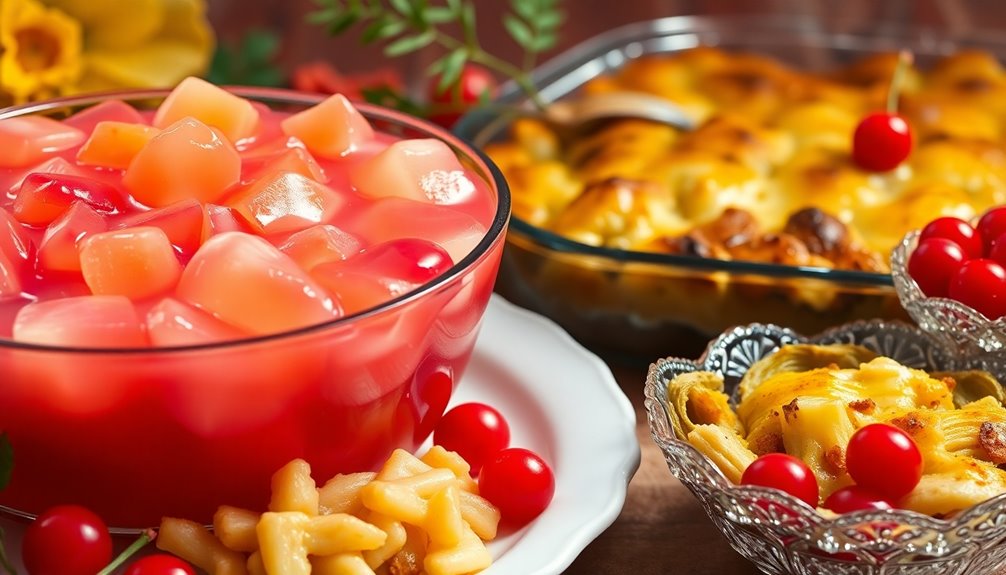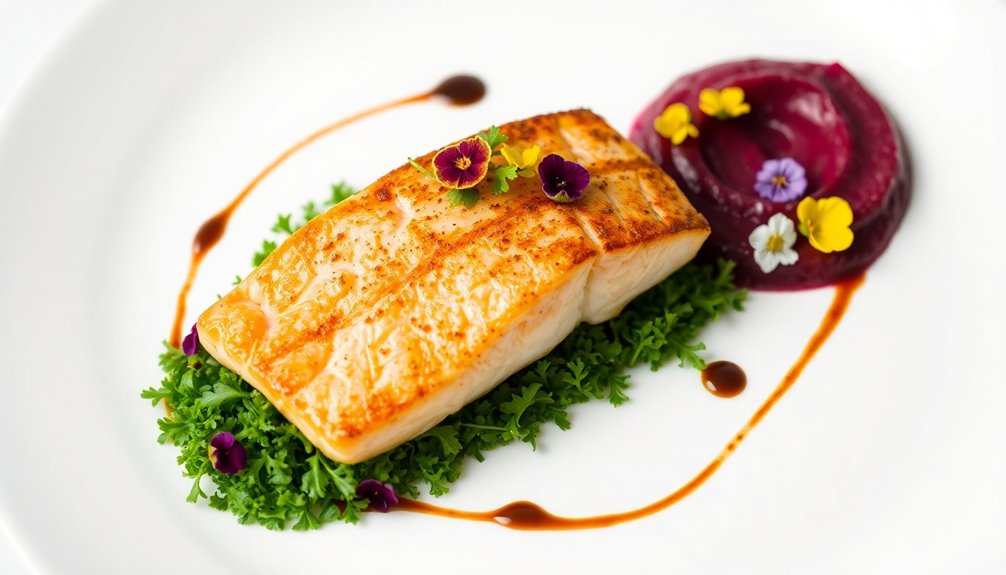
To plate food like a true kitchen artist, one must understand the basics of aesthetics, focusing on balance, color, and texture. Choosing the right plate size and shape improves the dish’s appeal. Mixing vivid colors and contrasting textures adds depth and interest. Garnishing with herbs or edible flowers raises the presentation further. Arranging elements in a balanced composition creates visual harmony. For those looking to master these techniques, there’s more to explore on this culinary expedition.
Article Highlights
- Focus on balance by arranging ingredients thoughtfully, using different heights and colors to create visual interest.
- Choose the right plate size and shape to enhance the dish’s presentation and perception.
- Master color and texture contrasts to make your dish visually striking and enticing to the eye.
- Use garnishes like edible flowers and herbs to add elegance and enhance the overall aesthetic of the meal.
- Create a balanced composition by arranging food proportionately, ensuring the main components are highlighted and harmoniously complemented.
Understanding the Basics of Plating

Though many might think plating is just about aesthetics, it’s actually a crucial element of the dining experience. Comprehending the basics of plating can boost a dish from ordinary to extraordinary. Effective plating techniques focus on balance, color, and height, creating a visual appeal that engages diners before they even take a bite. Chefs use various methods, such as stacking ingredients or employing negative space, to guide the eye and highlight key components of the dish. Furthermore, incorporating contrasting colors and textures adds depth, making the meal more inviting. By honing these fundamental aspects, anyone can improve their culinary creations and guarantee that each plate tells a story, inviting guests to savor not just the flavors, but the artistry as well.
Choosing the Right Plate
When selecting the right plate for a dish, it’s essential to contemplate both the food and the overall presentation. The plate size can dramatically affect how the dish is perceived; a large plate can create a sense of space, whereas a smaller plate can make portions appear more generous. Furthermore, the plate shape plays a significant role in the presentation. Round plates are classic and versatile, while square or rectangular plates can lend a modern touch. Choosing an unconventional shape can as well add a unique flair, encouraging diners to appreciate the artistry of the meal. In the end, the right combination of plate size and shape improves the dish and raises the dining experience, making it visually appealing and memorable.
Mastering Color and Texture

After choosing the right plate, the next step is to focus on perfecting color and texture in food presentation. A skilled kitchen artist knows that using vivid color combinations can make a dish pop, whereas the right texture contrasts add depth. Bright greens, rich reds, and creamy whites work harmoniously to entice diners.
Here’s a simple guide to help visualize these elements:
| Color Combinations | Texture Contrasts |
|---|---|
| Green + Red | Crunchy + Creamy |
| Yellow + Blue | Soft + Crispy |
| Orange + Purple | Silky + Chewy |
| White + Brown | Fluffy + Firm |
The Art of Garnishing
Garnishing is an essential element that improves the visual appeal of a dish, turning a simple meal into an artistic presentation. Chefs use various garnishing techniques to raise their creations, making them more inviting and memorable. One popular method involves the use of edible flowers, which add lively colors and delicate textures. Incorporating these flowers can transform a plate, bringing an unexpected freshness that complements the main ingredients. Chefs often choose flowers like nasturtiums or pansies for their striking appearance and subtle flavors. Furthermore, herbs, microgreens, and drizzles of sauce can likewise serve as effective garnishes. In the end, thoughtful garnishing not merely beautifies a dish but also improves the overall dining experience, inviting diners to engage with the meal.
Creating a Balanced Composition

Achieving a balanced composition on a plate is crucial for creating an appealing dish that draws the diner’s eye. A skilled chef knows how to apply proportion techniques to highlight the main components while ensuring each element complements the others. By arranging food in a way that maintains visual balance, one can create a harmonious presentation. For instance, placing a protein in one corner and balancing it with vegetables on the opposite side creates a striking contrast. Moreover, using different heights and colors adds depth, making the plate more inviting. Ultimately, the goal is to guide the diner’s gaze across the plate, enticing them to savor the meal. A well-composed dish not just satisfies the palate but also pleases the eye.
Frequently Asked Questions
What Tools Do Professional Chefs Use for Plating Food?
In terms of plating, one might think professional chefs wield magic wands instead of plating tools. But alas, they rely on more mundane instruments! Chefs use tweezers for delicate arrangements, squeeze bottles for artistic sauces, and rings for perfect shapes. With these chef techniques, they turn food into edible masterpieces. So, next time you admire a dish, remember: it’s not sorcery, just skillful use of plating tools and a dash of creativity!
How Can I Practice Plating at Home Without Wasting Food?
To practice plating at home without wasting food, she can use food scraps and leftover ingredients creatively. By transforming these leftovers into beautiful presentations, she not only hones her skills but likewise minimizes waste. Experimenting with different arrangements, colors, and textures will improve her plating technique. Furthermore, using small portions of various items allows her to play around without feeling guilty about throwing anything away. It’s a win-win for her culinary adventure!
Are There Any Plating Trends to Follow This Year?
In a world where food is a mere accessory to Instagram, it’s crucial to stay trendy. This year, minimalist plating’s taken center stage, proving that less truly is more—who knew? Bright colors are making a splash, inviting diners to feast with their eyes first. Chefs are embracing negative space, allowing each element to shine. So, why not let that lonely pea sit proudly on a blank plate? It’s all the rage, darling!
Can I Use Frozen Ingredients for Plating Presentations?
In terms of using frozen ingredients for plating presentations, one might think twice. Nevertheless, with the right plating techniques, frozen ingredients can work beautifully. They can add color and texture, enhancing the overall visual appeal. Chefs often thaw and prepare these ingredients carefully to maintain quality. By combining frozen elements with fresh components, one can create stunning dishes that showcase creativity, proving that frozen ingredients have a place in artistic plating.
How Do I Clean and Maintain My Plates for Presentation?
Studies show that over 70% of foodborne illnesses stem from improper dish cleaning. To guarantee safe and appealing presentations, one must prioritize plate sanitization. After each use, they should thoroughly wash the plates with hot, soapy water, followed by rinsing and drying. For deeper cleaning, a mild bleach solution can be used for surface cleaning, making certain all residues are eliminated. A well-maintained plate reflects both hygiene and artistry in culinary presentation.