
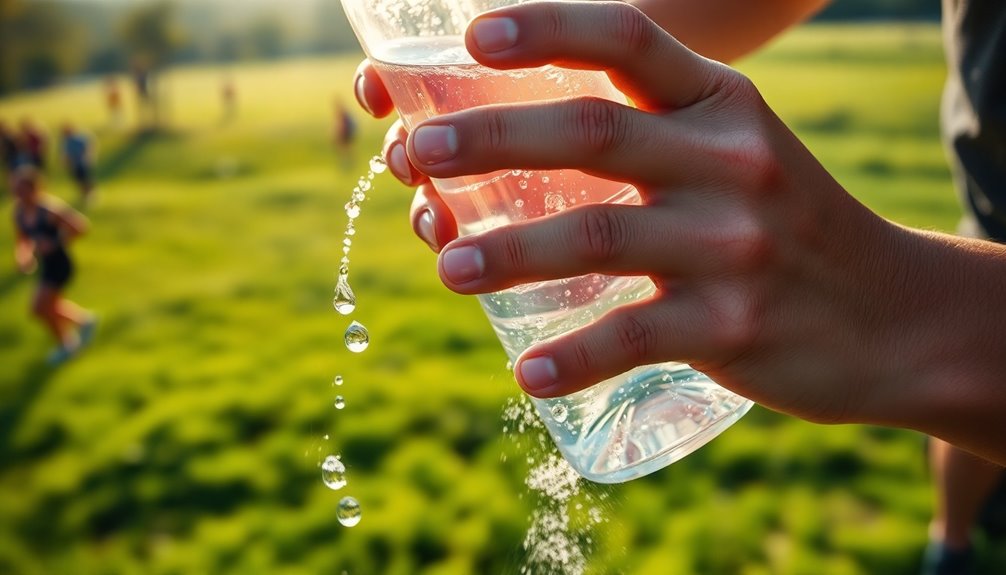
Hydration is essential for your performance, affecting energy, focus, and recovery. To optimize your hydration, drink water consistently throughout the day, especially before, during, and after workouts. Recognize signs of dehydration like fatigue and headaches, and aim for about 2.7 liters daily if you’re female or 3.7 liters if you’re male. Incorporating water-rich foods and electrolyte drinks can improve your hydration strategy. Want to know more about making hydration a daily habit? There’s plenty more to uncover!
Article Highlights
- Stay hydrated by drinking 2.7 liters for women and 3.7 liters for men daily, adjusting for activity level and environmental factors.
- Recognize dehydration signs like fatigue, headaches, and dark urine to maintain optimal hydration for performance.
- Hydrate 2-3 hours before workouts and consistently sip water during and after physical activity for effective recovery.
- Incorporate water-rich foods and electrolyte beverages to enhance hydration and replenish lost minerals from sweating.
- Use hydration reminders and engage with a community to foster accountability and reinforce healthy hydration habits.
Why Hydration Matters for Performance
When you consider your performance, hydration often plays a more vital role than you might think. The hydration science behind it shows that staying well-hydrated directly impacts how you feel and perform, whether you’re hitting the gym or simply going about your day. Proper hydration supports energy levels, endurance, and focus, making it fundamental for performance optimization. You may not realize it, but even slight dehydration can lead to fatigue and decreased motivation, which can affect your overall experience in group activities or sports. By prioritizing hydration, you not only improve your personal performance but also cultivate a sense of belonging within your community. So, reach for that water bottle and embrace the strength of hydration together with others who share your goals!
Recognizing Signs of Dehydration
How can you tell if your body is becoming dehydrated? It’s essential to recognize dehydration symptoms early. You might notice feelings of fatigue, headaches, or even dry mouth. Some folks think they can wait until they’re thirsty, but that’s a common hydration myth. By the time you feel thirsty, your body’s already signaling that it needs water. Look for other signs too, like dark urine or dizziness. Staying connected with your body is key—if you’re feeling off, it could be your body’s way of saying it needs hydration. Remember, you’re not alone in this; many people struggle with recognizing these signs. Trust your instincts, and don’t hesitate to drink up when you suspect dehydration. Your body will thank you! Additionally, drinking lots of water helps regulate body temperature, which is crucial for overall health during travel.
How Much Water Do You Really Need?
Knowing how much water you really need can depend on various factors like your activity level, climate, and personal health. It’s important to stay aware of daily water intake guidelines and recognize signs of dehydration. Let’s explore how to determine your unique hydration needs.
Factors Influencing Hydration Needs
Though individual hydration needs can differ markedly, several key factors play a vital role in determining how much water you really need. Your age factors into this equation, as younger bodies often require more fluid. If you’re active, your activity level increases your hydration demands, especially during workouts or sports. Environmental conditions, like heat or humidity, furthermore influence how much you should drink; the hotter it is, the more you’ll sweat. In addition, your diet composition matters—foods high in salt or sugar can dehydrate you. Finally, your health status is significant; certain illnesses or medications can alter your hydration needs. By considering these factors, you’ll find a balanced approach to staying hydrated and performing at your best.
Daily Water Intake Guidelines
Comprehending your hydration needs is key to determining your daily water intake. Many folks wonder how much water they really need, often led astray by hydration myths. Typically, aim for about 2.7 liters (91 ounces) for women and 3.7 liters (125 ounces) for men, but personal factors play a role.
Here’s a simple table to guide you:
| Activity Level | Daily Water Intake (liters) | Notes |
|---|---|---|
| Sedentary | 2.0 | Minimal exertion |
| Light activity | 2.5 | Casual walking |
| Moderate activity | 3.0 | Exercise 3-4 times a week |
| High activity | 3.5 | Intense workouts |
| Extreme conditions | 4.0+ | Hot weather, high altitude |
Stay aware, stay hydrated!
Signs of Dehydration Awareness
Dehydration can sneak up on you, often without obvious signs until it becomes a serious issue. It’s easy to overlook those early dehydration symptoms, like fatigue or a dry mouth. You might think you’re just tired, but these can be your body’s thirst cues telling you it needs more water. Feeling a bit dizzy or having a headache? That’s another red flag. Remember, staying connected and aware can help you feel your best. It’s not just about drinking when you’re parched; make it a habit to sip throughout the day. Your body thrives on hydration, and you’ll notice the difference in your performance and energy levels. So, tune into your body and prioritize your hydration needs!
When Should You Hydrate?
Knowing when to hydrate is vital for optimal body performance, especially during physical activities. You should aim for ideal hydration by drinking water before, during, and after exercise. To truly maximize your performance, hydrate about 2-3 hours before your workout. This helps prepare your body for the upcoming challenge. During your activity, sip water regularly, particularly if it’s intense or lasts longer than an hour. Post-workout, rehydrate to replenish lost fluids—this is essential for recovery. Remember, hydration timing is key; don’t wait till you’re thirsty, as that’s often too late. By staying proactive about your hydration, you’ll not just feel better but additionally connect with others who prioritize their health. Together, you’ll conquer your fitness goals!
Healthy Hydration Sources to Consider
In regards to staying hydrated, it’s not just about plain water. You can boost your hydration with water-rich fruits, electrolyte-infused beverages, and even herbal teas. Each of these options offers unique benefits that can improve your overall body performance.
Water-Rich Fruits
Though staying hydrated is crucial for peak body performance, incorporating water-rich fruits into your diet can be a delicious and effective way to boost your fluid intake. Fruits like watermelon and cucumber not only quench your thirst but additionally offer extra health benefits. Watermelon benefits include vitamins A and C, whereas cucumber hydration helps keep you refreshed without added calories.
Here’s a handy table to help you choose:
| Fruit | Water Content | Benefits |
|---|---|---|
| Watermelon | 92% | Rich in vitamins, low in calories |
| Cucumber | 95% | Hydrating, supports skin health |
| Strawberries | 91% | High in antioxidants, tasty snack |
Adding these fruits to your meals can improve your hydration and overall well-being!
Electrolyte-Infused Beverages
To maintain ideal hydration, consider incorporating electrolyte-infused beverages into your routine, especially during intense workouts or hot weather. These drinks can help you achieve the right electrolyte balance, replenishing vital minerals lost through sweat. By timing your hydration correctly, you’ll improve your performance and recovery.
Many brands offer delicious options, so you’ll likely find one that fits your taste. Whether you prefer a fruity flavor or something more subtle, these beverages can cultivate a sense of community among fellow fitness enthusiasts. Sharing your favorite electrolyte drinks can spark conversations and deepen connections. So, next time you’re gearing up for an activity, keep in mind that staying hydrated with electrolytes can not just boost your performance but also help you feel more connected with others on the same path.
Herbal Teas Benefits
Even though many people think of water as the go-to for hydration, herbal teas offer a flavorful and nutritious alternative that can improve your overall well-being. With a wide range of herbal tea varieties, from calming chamomile to invigorating peppermint, there’s something for everyone. Each cup not just hydrates but also brings unique benefits, often packed with antioxidant properties that help protect your body from free radicals. By incorporating herbal teas into your routine, you can enjoy a sense of community, as many cultures celebrate tea-drinking traditions. So, whether you’re sipping alone or sharing with friends, you’re nurturing connection as you nourish your body. Embrace the warmth and health benefits of herbal teas as a delightful part of your hydration expedition.
Practical Hydration Strategies for Athletes
Regarding optimizing your performance, staying properly hydrated is essential for athletes at all levels. To achieve this, focus on hydration timing. Drink water before, during, and after your workouts to maintain peak performance. You can additionally improve your routine by practicing hydration tracking. Use a simple app or a journal to monitor your fluid intake and verify you’re meeting your hydration goals. This way, you can adjust your habits as needed and see what works best for you. Remember, everyone’s hydration needs are different, so listen to your body. Forming a community with fellow athletes can help you stay accountable and motivated. Together, you can share tips and experiences that support your hydration quest, nurturing a sense of belonging.
How Hydration and Electrolytes Aid Recovery
Staying hydrated isn’t just significant during workouts; it plays a major role in your recovery process as well. Proper hydration benefits your muscles and joints, helping to reduce soreness and speed up healing. When you sweat, you lose not just water but essential electrolytes too. Maintaining electrolyte balance is paramount for preventing cramping and fatigue as you recover. It’s easy to overlook this aspect, but replenishing those lost electrolytes—like sodium and potassium—can make a big difference in how you feel post-exercise. By prioritizing hydration and ensuring you’re getting enough electrolytes, you’re setting yourself up for ideal recovery. You’re not just part of a group; you’re part of a community that understands the significance of taking care of your body.
Tailored Hydration Tips for Active Lifestyles
How can you enhance your hydration strategy to match your active lifestyle? First, understand your hydration challenges. If you’re sweating a lot during workouts, you might need more than just water. Consider adding electrolytes to replenish what you lose. Address common hydration myths, like the idea that you only need to drink when you’re thirsty. Staying ahead means sipping throughout the day, especially before, during, and after exercise. Tailor your approach based on your activity level; longer workouts require more hydration. At social events, choose water-rich snacks, and encourage friends to join you in making hydration a priority. By sharing tips and experiences, you create a supportive community dedicated to achieving peak performance together.
How to Make Hydration a Daily Habit
Making hydration a daily habit can greatly improve your performance and overall well-being. To make it stick, start by integrating hydration reminders into your daily routines. Set an alarm on your phone or use a hydration app to nudge you at regular intervals. Carry a reusable water bottle with you, so you’re always reminded to sip throughout the day. You could likewise pair drinking water with existing habits, like having a glass before meals or after your morning coffee. Joining a community, whether online or in-person, can provide support and encouragement as you share your goals. Remember, staying hydrated isn’t just good for you; it can help everyone around you feel their best too.
Frequently Asked Questions
Can Hydration Affect Mental Performance as Well as Physical Performance?
Absolutely, hydration can greatly affect your mental performance along with physical performance. When you stay hydrated, you’re not just boosting your energy; you’re enhancing cognitive function too. It helps with focus, memory, and overall brain health. Envision how much better you’d feel tackling tasks with clarity! So, don’t underestimate the hydration benefits—make sure you’re drinking enough water throughout the day to keep both your body and mind performing at their best.
Is It Possible to Overhydrate, and What Are the Risks?
Yes, it’s possible to overhydrate, and it can lead to serious health risks. When you drink too much water, you can disrupt your electrolyte balance, causing symptoms like headaches, confusion, and even seizures. It’s vital to listen to your body and drink when you’re thirsty. Staying connected with friends can help you maintain healthy habits, so remember to share tips on hydration and support each other in staying balanced and healthy!
How Do Different Climate Conditions Impact Hydration Needs?
Different climate conditions definitely impact your hydration needs. In humid climates, you might sweat more, so you’ll need to replace fluids more often. Conversely, in dry, hot weather, your body loses moisture quickly, increasing your risk of dehydration. It’s crucial to pay attention to these climate variations and adjust your water intake accordingly. Staying in tune with your body’s signals helps you maintain ideal hydration, no matter the weather.
Can Certain Foods Contribute to Hydration Levels?
Absolutely, certain foods can really boost your hydration levels! Think of hydrating foods like cucumbers and watermelon as nature’s water bottles. They’re packed with water, helping maintain your electrolyte balance. It’s almost like you’re sipping from a fountain of freshness! Incorporating these foods into your diet not just quenches your thirst but additionally connects you with others who love nourishing their bodies. So, immerse yourself in those juicy treats and feel the hydration magic!
What Role Do Beverages Other Than Water Play in Hydration?
Beverages other than water, like sports drinks and herbal teas, can play a significant role in your hydration. Sports drinks replenish electrolytes lost during exercise, helping you stay energized. Herbal teas not just hydrate but furthermore provide antioxidants, making them a cozy option for relaxation. By incorporating these beverages into your routine, you’ll feel more refreshed and connected with others who enjoy varied hydration sources. So, mix it up and keep your hydration game strong!


