
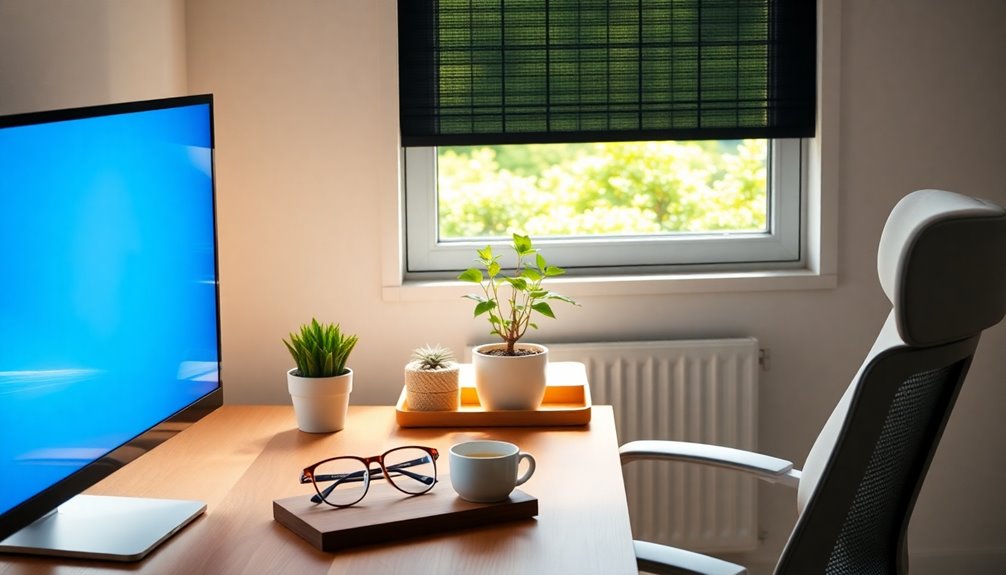
To reduce digital eye strain daily, try the 20-20-20 rule: every 20 minutes, look at something 20 feet away for 20 seconds. Adjust your screen settings to minimize glare, using warmer colors and softer lighting around you. Stay hydrated and eat a balanced diet with omega-3s, antioxidants, and vitamin A for better eye health. Incorporating regular breaks and eye exercises will likewise help. Want to know more tips to keep your eyes comfortable?
Article Highlights
- Follow the 20-20-20 rule: take a break every 20 minutes to look at something 20 feet away for 20 seconds.
- Adjust screen brightness and contrast to match surrounding lighting, minimizing glare and discomfort.
- Incorporate eye exercises into your routine to strengthen eye muscles and reduce fatigue.
- Maintain a balanced diet rich in omega-3s, antioxidants, and hydration to support overall eye health.
- Schedule regular eye exams to identify personal triggers and receive tailored solutions for eye strain.
Why Digital Eye Strain Matters: Understanding the Risks
As you spend more time in front of screens, it is crucial to understand the risks associated with digital eye strain. Many of us share this experience, and knowing the factors at play can help you feel less alone. Common risk factors include prolonged screen time, poor lighting, and improper viewing distances. If you’re constantly glued to your devices, you might face long-term effects like chronic discomfort or even vision problems. It’s not just about feeling tired; these issues can impact your daily life and well-being. By acknowledging these risks, you can take proactive steps to protect your eyes. You’re not just safeguarding your vision; you’re additionally investing in your overall health and happiness, which is something we all aim for.
Recognizing the Symptoms of Digital Eye Strain
Digital eye strain can manifest in several ways, and recognizing these symptoms early can make a significant difference in your comfort. You might notice visual discomfort, including blurred vision, dry eyes, or headaches after long hours in front of screens. These signs are your body’s way of telling you to pay attention. It’s crucial to practice symptom identification so you can take proactive steps to alleviate strain. If you find yourself squinting or feeling fatigued after digital tasks, you’re not alone. Many people experience similar issues, and acknowledging these symptoms can create a sense of community. Sharing your experiences with others can help you find effective solutions together, making your digital interactions more enjoyable and less painful.
Use the 20-20-20 Rule to Combat Digital Eye Strain
After recognizing the symptoms of digital eye strain, it’s important to take proactive measures to alleviate discomfort. One effective method is the 20-20-20 rule. Every 20 minutes, look at something 20 feet away for 20 seconds. This simple practice has incredible 20 20 20 benefits, helping your eyes relax and recover from screen fatigue. You’re not alone in feeling the strain; many people experience this, and incorporating the 20-20-20 rule into your routine can nurture a sense of community in prioritizing eye health. Remember, it’s about giving your eyes the vision relaxation they deserve amidst our tech-driven lives. So, set a timer, connect with others, and make this rule a part of your daily habits.
How to Adjust Your Screen Settings for Comfort
To improve your comfort during using screens, adjusting your display settings can make a significant difference. Start by tweaking your screen brightness; it should match your surrounding environment, so you’re not straining to see. If it’s too bright or too dim, your eyes can feel fatigued. Next, consider the color temperature of your screen. Warmer tones are easier on the eyes, especially during evening hours, and can help reduce blue light exposure. Many devices have built-in features or apps that allow you to customize these settings easily. By making these small adjustments, you’ll create a more inviting space for your eyes, making it easier to connect with what you love online without discomfort.
Proper Lighting: Reducing Glare for Better Vision
Adjusting your screen settings is just one part of creating a comfortable viewing experience. Proper lighting plays a significant role, too. To improve your workspace, try using soft, diffused lighting techniques that minimize harsh shadows and bright spots. Position your light sources behind or beside your screen to reduce glare—this simple adjustment makes a world of difference. Avoid fluorescent bulbs, as they can create uncomfortable flickers. Instead, opt for warm LED lights that provide a cozy atmosphere. Remember, good lighting not only aids in glare reduction but also helps you feel more relaxed and focused. By making these changes, you’ll cultivate an environment where you and your eyes can thrive together.
How to Take Effective Breaks to Reduce Digital Eye Strain
During working long hours on screens, it’s easy to forget that your eyes need a break. Implementing effective break techniques can greatly reduce digital eye strain. Try the 20-20-20 rule: every 20 minutes, take a 20-second break to look at something 20 feet away. Here’s a simple table to help you plan your screen downtime:
| Time | Activity | Purpose |
|---|---|---|
| 20 minutes | Look away | Relax eye muscles |
| 5 minutes | Stretch | Release tension |
| 10 minutes | Walk around | Refresh your mind |
| 15 minutes | Meditate | Focus and recharge |
Hydration and Nutrition for Eye Health
To truly support your eye health, you need to pay attention to what you eat and drink. Staying hydrated and incorporating vital nutrients can make a big difference in how your eyes feel during long screen sessions. Let’s explore some hydration strategies and foods that can boost your vision.
Essential Nutrients for Eyes
Although many people focus on screen time when considering eye health, the nutrients you consume play a crucial role in maintaining good vision and reducing digital eye strain. Incorporating specific nutrient sources into your diet can make a significant difference. Omega-3 fatty acids, found in fish like salmon, promote retinal health, whereas leafy greens like spinach and kale provide antioxidants that fight free radicals. Furthermore, vitamin A from carrots and sweet potatoes supports your overall vision. Don’t forget about zinc, which helps maintain the retina and can be found in nuts and whole grains. By prioritizing these nutrients, you not only support your eye health but also encourage a sense of community as you share healthy habits with others.
Hydration Strategies for Comfort
How often do you think about the importance of staying hydrated for your eyes? Staying hydrated isn’t merely about quenching your thirst; it’s crucial for maintaining eye comfort, especially when staring at screens. Here are some simple hydration tips to help you out. First, keep a water bottle at your desk to remind yourself to drink regularly. If plain water doesn’t excite you, consider creative beverage choices like herbal teas or infused water with fruits. These can make hydration more enjoyable. Additionally, set reminders on your phone to take regular hydration breaks. By making small changes to your daily routine, you’ll not only stay hydrated but furthermore help reduce digital eye strain. Your eyes will thank you!
Foods That Boost Vision
Incorporating certain foods into your diet can greatly improve your vision and overall eye health. You don’t have to make drastic changes; just add some delicious, vision-boosting foods to your meals. Here are three simple options to get you started:
- Carrots: Packed with beta-carotene, they’re a classic choice for eye health.
- Spinach: This leafy green is rich in lutein and zeaxanthin, which protect your eyes from harmful light.
- Blueberries: Loaded with antioxidants, they help reduce the risk of eye diseases.
Try experimenting with eye-friendly recipes that include these ingredients. Enjoying these foods can create a sense of community as you share your experience toward better vision with friends and family.
Are Blue Light Blocking Glasses Effective for Digital Eye Strain?
As many people turn to blue light blocking glasses as a solution for digital eye strain, the effectiveness of these glasses can vary. Although they’re designed to filter out harmful blue light emitted from screens, not everyone experiences significant relief. It’s vital to evaluate lens effectiveness; some glasses may offer better protection than others. If you’re part of a community that’s found relief through these lenses, you might feel more inclined to try them yourself. Nevertheless, don’t forget that taking regular breaks from screens, practicing the 20-20-20 rule, and adjusting your workspace lighting can additionally play significant roles in reducing eye strain. In the end, finding what works best for you is key to feeling your best in this digital age.
Frequently Asked Questions
How Often Should I Have My Eyes Tested?
They say, “An ounce of prevention is worth a pound of cure.” You should have your eyes tested at least once every two years, but if you’re experiencing issues or are over 60, consider annual check-ups. Regular eye tests are vital for maintaining your eye health and ensuring good vision care. Don’t wait until something feels off; it’s all about staying proactive and connected to your overall well-being. You deserve to see the world clearly!
Can Digital Eye Strain Cause Permanent Damage?
Yes, digital eye strain can potentially lead to permanent effects on your eye health if it’s not addressed. Prolonged exposure to screens without proper breaks might contribute to issues like dry eyes, blurred vision, and discomfort. It’s important to listen to your body and take regular breaks, ensuring you’re caring for your eyes. You’re not alone in this; many people face similar challenges, so prioritize your eye health and seek solutions together.
Are There Specific Exercises for Eye Relaxation?
You can definitely try eye yoga and other relaxation techniques to soothe your eyes. Envision sitting in a peaceful garden, closing your eyes, and gently rolling them in circles. This simple exercise helps release tension. You can likewise focus on an object far away for a minute, giving your eyes a break from screens. Regularly practicing these techniques can make you feel more connected and relaxed, just like a shared moment with friends over a cup of tea.
Is There a Recommended Screen Distance for Optimal Viewing?
For ideal viewing, you should keep your screen about 20 to 30 inches away from your eyes. This distance helps reduce strain and keeps your posture in check. Adjust your screen placement so the top of the display is at or just below eye level. By following these distance guidelines, you’ll find it easier to focus and enjoy your time online without discomfort. Your eyes will thank you for it!
What Are the Best Types of Computer Glasses?
The best types of computer glasses often feature blue light-blocking technology. Did you know that studies show up to 80% of people experience digital eye strain? If you’re one of them, consider getting prescription lenses designed particularly for screen use. These glasses help reduce glare and improve contrast, making your time online more comfortable. Plus, wearing them can help you feel more connected and at ease during those long hours at the computer.


