
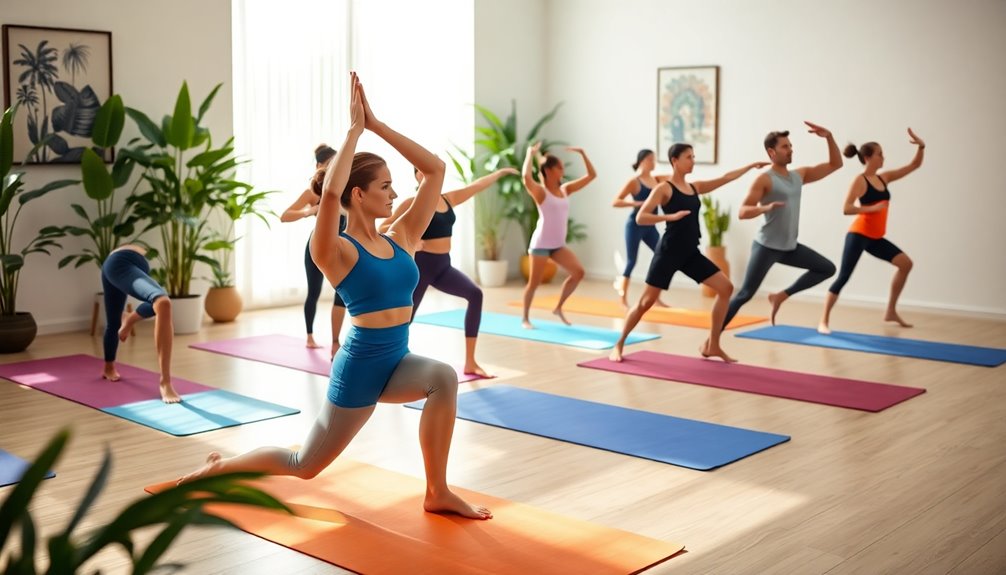
If you’re looking to improve your flexibility and strength, beginner-friendly yoga sequences can really help. Start with key poses like Warrior, Tree, and Downward Dog, which build a solid foundation. Incorporate simple sequences that flow from one pose to another, focusing on breath and alignment. A quick 20-minute routine, including Plank and Chair Pose, can fit into busy schedules too. Want to learn more about enhancing your practice? There’s plenty more to discover!
Article Highlights
- Start with Cat-Cow Pose to warm up the spine and release tension before moving into stronger poses.
- Incorporate standing poses like Warrior Pose and Chair Pose to build strength and confidence.
- Use Downward Dog to stretch and strengthen the hamstrings and calves while improving overall flexibility.
- Include seated stretches such as Seated Forward Bend and Bound Angle Pose for enhanced flexibility and relaxation.
- Consistent practice of simple sequences, focusing on alignment, promotes both strength and flexibility over time.
How to Start Yoga for Flexibility and Strength
Starting your yoga adventure can be an empowering experience, especially when your goals include enhancing flexibility and strength. You’ll discover that various yoga styles, like Hatha or Vinyasa, can help you reach these goals as you create a sense of community. Embrace the journey by exploring different classes and finding one that resonates with you. As you practice, focus on breath techniques, like Ujjayi breathing, to deepen your connection with your body and mind. Each session isn’t just about physical transformation; it’s about belonging to a supportive environment. Don’t hesitate to ask questions or share your thoughts with fellow practitioners. Remember, every small step counts, and you’re not alone on this path. Enjoy the growth and connection that yoga brings!
Key Beginner-Friendly Yoga Poses to Learn
When you’re starting your yoga path, it’s important to focus on some key poses that will build your foundation. Crucial standing poses help improve your balance and strength, whereas key seated stretches boost flexibility and relaxation. Let’s explore these crucial poses that will support your practice.
Essential Standing Poses
Perfecting a few vital standing poses can transform your yoga practice and build a solid foundation for your expedition. These poses not only improve flexibility and strength but also promote a sense of belonging within your practice community. Here are some fundamental standing poses to focus on:
- Warrior Pose: Boosts confidence and stability.
- Tree Pose: Improves balance and focus.
- Mountain Pose: Establishes grounding and alignment.
- Triangle Pose: Improves flexibility in the hips and legs.
- Chair Pose: Builds strength in the legs and core.
As you explore these poses, you’ll feel more connected to your body and the community around you. Embrace the expedition, and remember, everyone starts somewhere!
Key Seated Stretches
Seated stretches are essential for any beginner’s yoga adventure, offering a perfect way to improve flexibility and relaxation. Two key poses to focus on are seated forward bends and seated spinal twists. These stretches not only improve flexibility but also deepen your connection to your breath and body.
| Pose | Benefits | Tips |
|---|---|---|
| Seated Forward Bend | Lengthens the spine | Keep your back straight |
| Seated Spinal Twist | Increases spinal mobility | Twist gently, breathe deeply |
| Bound Angle Pose | Opens hips | Press soles together |
| Staff Pose | Strengthens core | Sit tall, engage abdominals |
| Easy Pose | Promotes relaxation | Focus on your breath |
Embrace these stretches; they’ll help you feel grounded and connected. Enjoy your adventure!
Simple Yoga Sequences for Enhanced Flexibility
Though you may think of flexibility as a physical trait, it can also be developed through consistent practice of simple yoga sequences. By incorporating beginner modifications and using yoga props, you can improve your flexibility as you feel supported on your path.
Here are some simple sequences to try:
- Cat-Cow Pose: Warm up your spine and release tension.
- Downward Dog: Stretch your hamstrings and calves, finding length.
- Lizard Pose: Open your hips and groin for deeper flexibility.
- Seated Forward Bend: Lengthen your spine as you calm your mind.
- Child’s Pose: Rest and integrate your practice, allowing for recovery.
20-Minute Yoga Routine for Strength
If you’re looking to build strength without dedicating a lot of time, a minute yoga routine can be an effective solution. These quick, strength-building workouts are perfect for anyone wanting to fit exercise into a busy schedule. Here’s a simple table to guide you through some potent poses:
| Pose | Duration (Minutes) |
|---|---|
| Plank | 1 |
| Chair Pose | 1 |
| Warrior II | 1 |
| Bridge Pose | 1 |
| Downward Dog | 1 |
In just five minutes, you can engage your muscles and boost your overall strength. Remember, every little bit counts, and you’re part of a community aiming for healthier lives together!
How to Align Your Body in Yoga Poses
Proper alignment in yoga poses is crucial, as it not only enhances your practice but also helps prevent injuries. When you focus on body alignment, you create a supportive foundation for your movements. Here are some tips for making effective pose adjustments:
- Engage your core to stabilize your spine.
- Keep your knees aligned over your ankles in standing poses.
- Relax your shoulders away from your ears.
- Distribute your weight evenly across your feet.
- Breathe deeply, allowing your body to settle into each pose.
Creating a Consistent Yoga Practice at Home
Establishing a consistent yoga practice at home can be as rewarding as perfecting alignment in your poses. To make it easier, consider these tips for effective time management and creating a supportive home environment:
| Time Slot | Yoga Activity | Duration |
|---|---|---|
| Morning | Sun Salutations | 15 minutes |
| Afternoon | Gentle Stretch | 10 minutes |
| Evening | Restorative Poses | 20 minutes |
| Weekend | Online Class | 30 minutes |
| Anytime | Mindfulness Meditation | 5 minutes |
Adapting Yoga for Your Individual Needs?
Adapting yoga to suit your individual needs is essential for creating a practice that feels both comfortable and rewarding. Everyone’s body is unique, so it’s important to listen to yours. Here are some tips to help you make personal modifications and consider any injury considerations:
- Start with gentle poses that feel right for your body.
- Use props like blocks or straps to support your practice.
- Modify poses to reduce strain on injured areas.
- Focus on your breath; it helps you connect with your body.
- Don’t hesitate to skip poses that don’t feel good.
Frequently Asked Questions
How Often Should I Practice Yoga for Optimal Results?
To achieve ideal results, you should aim to practice yoga at least three to four times a week. But it’s not just about the frequency; it’s about your practice consistency. Each session builds upon the last, creating a beautiful path toward growth and connection. Envision the strength and flexibility blossoming within you, as you join a community of like-minded individuals. With dedication, you’ll find a deeper sense of belonging and well-being.
What Should I Wear for Yoga Practice?
For yoga practice, you should wear comfortable yoga attire that allows for easy movement. Look for stretchy fabrics like cotton or moisture-wicking blends; they’ll keep you cool and let you flow through poses without restriction. Avoid anything too loose that might get in your way. Choose colors and styles that make you feel good—yoga is about connecting with yourself, and feeling confident in your outfit can improve that experience.
Can Yoga Help With Stress Relief?
Absolutely, yoga can help with stress relief! By incorporating mindfulness techniques and breathing exercises into your practice, you’ll find it easier to center yourself and let go of tension. When you focus on your breath and the present moment, it creates a calming effect that can reduce anxiety. Plus, being part of a community during classes nurtures a sense of belonging, making it even more beneficial for your mental well-being.
Do I Need Special Equipment for Yoga?
No, you don’t need special equipment to practice yoga, but having some yoga props can improve your experience. Important gear like a mat, blocks, and straps can provide support and help you achieve better alignment. Nonetheless, many people practice effectively with just their body and a little creativity. Remember, it’s all about finding what feels good for you. You’ll discover your own unique path in this welcoming community!
Is It Safe to Practice Yoga During Pregnancy?
Yes, it’s typically safe to practice yoga during pregnancy, especially with prenatal modifications. You’ll find that yoga offers numerous benefits, like reducing stress and improving flexibility, which can be really helpful as your body changes. Just listen to your body and avoid poses that don’t feel right. Joining a supportive community can make your experience even more fulfilling, so don’t hesitate to connect with other pregnant yogis for encouragement and shared experiences.


